Caring for Homebound and Aging Members Who Aren't in the Room
The members who can no longer attend are the easiest ones to lose track of. Here is a practical framework for building homebound and senior care that keeps going when the visit is over.
The People Your Systems Stop Noticing
Most church care systems are built around presence. Attendance tells you who was there. Group rosters tell you who is connected. Serving schedules tell you who is engaged. All of it works beautifully — right up until someone stops being able to come.
When a longtime member enters assisted living, recovers from a stroke, or simply reaches the point where the drive is too much, they quietly disappear from every list a church actually looks at. Nobody decides to stop caring. The visits are frequent for a few weeks, then monthly, then occasional. A year later a staff member asks, "Has anyone seen Dorothy lately?" and the room goes silent.
These are often the people who built your church — who taught the classes, paid off the building, and prayed for the pastor before the pastor was born. Caring for them well takes structure, because good intentions alone have a very short half-life.
Start With an Actual List
Before anything else, find out who these people are. Most churches genuinely do not know. Ask your longest-tenured members, your deacons, and your women's ministry leaders to name everyone who used to attend and no longer can. Cross-reference that against members who haven't been recorded present in six months.
For each person, write down what you learn:
- Where they live now — home, a family member's house, a facility, and which room
- Who the primary caregiver or adult child is, and how to reach them
- What the practical limitations are — mobility, hearing, memory, vision
- Whether visits need to be scheduled around care routines or nap times
- Anything that makes visits meaningful: hymns they love, a shared history, grandchildren's names
That last item matters more than it looks. It's the difference between a volunteer who stays fifteen awkward minutes and one who stays an hour because they know exactly what to talk about.
Assign Names, Not Committees
The single most common failure in homebound ministry is diffuse responsibility. "The care team visits our shut-ins" produces far fewer visits than "Linda has Dorothy, Marcus has the Hendersons."
Pair each homebound member with one or two specific people who own that relationship for at least a year. Longevity is the point — a rotating schedule of unfamiliar faces is hospitality, but sustained pairing is friendship. Where you can, match on shared history or life stage.
Then give those volunteers a rhythm they can keep: one visit a month, one phone call in between, a text to the family afterward. Ambitious schedules collapse; modest ones compound over years.
Track the Last Contact Date
You don't need much data to run this well, but you do need one number: when did someone last hear from us? Care slips through the cracks in the gap between "I meant to call" and "I assumed someone else did."
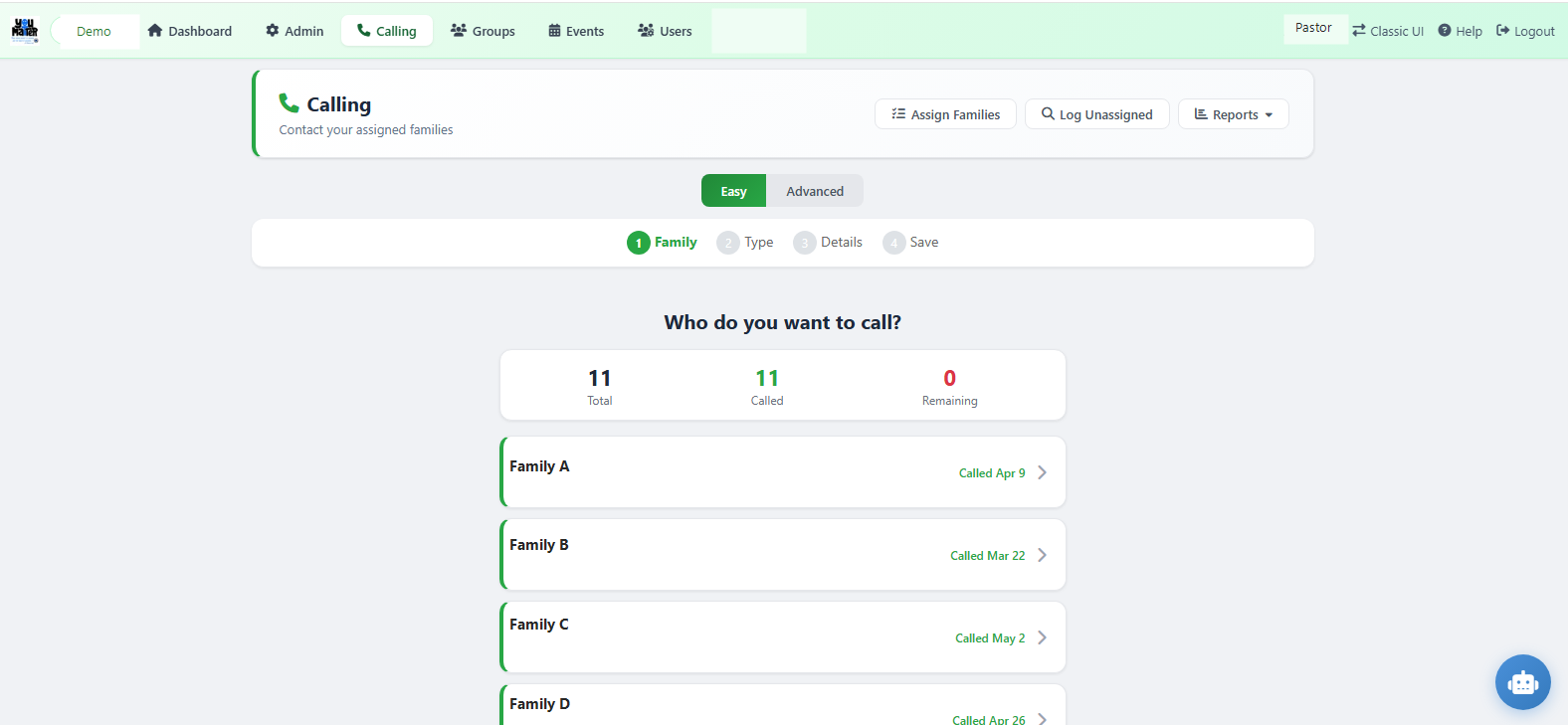
Some churches keep a simple shared sheet with a name, a visitor, and a date, reviewed at every staff meeting. Others log visits in their church management system — platforms like You Matter keep contact notes attached to the member record, so a pastor preparing for a hospital call can see the last six months of care at a glance rather than reconstructing it from memory. Whichever route you take, the discipline is the same: one person scans the list monthly and asks who has gone quiet.
A word on notes: write what helps the next person serve well, not everything you know. Record that a surgery is scheduled and the family is anxious. Don't record the confidential details shared in tears. A care record should never become something a member would be hurt to read.
Bring the Church to Them
Visits are the center, but they aren't the whole of it. Small logistical efforts return enormous relational value:
- Send the physical things. A printed bulletin, a large-print devotional, or a copy of the sermon on a simple USB player reaches people no livestream will.
- Bring communion. Train and commission lay members to serve it in homes. For many, it is the most anticipated hour of their month.
- Deliver the children. Have a kids' class make birthday cards, or bring the youth group caroling. Nothing lifts a facility hallway like children in it.
- Call on the calendar dates. Anniversaries of a spouse's death, birthdays, and holidays are the loneliest days. Put them where someone will see them coming.
Don't Forget the Caregivers
Behind most homebound members is an exhausted daughter or spouse doing hard work with little relief. They usually stop attending too, for the same invisible reasons. Ask directly how they're holding up. Offer a few hours of respite so they can get to a service, a meal on a hard week, or a phone call that isn't about logistics. Caring for the caregiver is caring for the member.
Measure It Once a Quarter
Four times a year, sit down with the list and ask plainly: Who has not been visited in ninety days? Which pairings have quietly lapsed? Who has moved, declined, or entered hospice without our knowing? Then fix what the review surfaces before the meeting ends.
A church's care for the people who can no longer walk through its doors is one of the truest measures of what it believes about belonging. Attendance will never tell you how you're doing there. Only a list, a rhythm, and someone willing to look will.
Related articles
Supporting Families Through Life Transitions in Your Church
Births, moves, illness, job loss, and grief reshape the families in your church. Learn practical ways church leaders can notice, respond to, and walk alongside people during major life transitions.
Pastoral CareThe Role of Data in Pastoral Care
Explore how thoughtful use of data strengthens pastoral care, helps leaders shepherd people well, and supports genuine relationships rather than replacing them.
Pastoral CareTracking Prayer Requests So Nothing Falls Through the Cracks
A practical guide for church leaders on building a reliable system for receiving, tracking, and following up on prayer requests so every member feels heard and cared for.